During my undergraduate studies, my professor Dr. Silvia used to start some classes with music.
It wasn’t to analyze the melody or figure out who the artist was it was to pay attention to the lyrics, and afterwards, we would talk about what that text evoked in each of us.
At that moment I didn’t know it, but I was learning a different way of reading.
Since then, some songs have come to keep company with my thoughts. Not because they bring answers, but because sometimes they can organize questions that I haven’t yet found the courage to write down.
That is exactly what happened when I heard Céu da Boca, by Jenni Mosello.
The song begins by saying:
“Since I was little I thought that to speak you have to ask for permission.”
And I kept thinking about how many times we do exactly that.
Not only in childhood, but also in adult life.
We learn that there are appropriate places for each part of ourselves.
At work, one posture is expected. At university, another. On the internet, yet another.
Little by little, we divide our identity into compartments, as if each environment authorizes only a specific version of who we are.
Perhaps that is why it took me so long to understand what, after all, was the place of this blog. For a long time, I thought I needed to decide either I wrote as a researcher, or I wrote as a person. As if these two existences did not occupy exactly the same body.
I have a degree in Library and Information Science, I write scientific articles, I do research, and I like references, footnotes, methodologies, and well constructed arguments.
But I also like to prepare tea when it’s cold and observe the seasons.
I like to embroider and write about memories. I learn through symbols in seemingly ordinary things, and none of these experiences cancels out the other.
On the contrary, it is precisely because I have lived all of them that I am able to research what I research.
Science often appears as a final product, but before it there is a person.
There is someone who observes, feels curiosity, asks questions, makes mistakes, changes their mind, starts over.
Research is not born in a laboratory it is born from a human experience.
That is why I began to think that perhaps this blog was never a space for publishing results perhaps it is the place where the questions are recorded.
Books show what we have managed to organize, and articles show what we have managed to demonstrate.
But there is a vast territory between living an experience and transforming it into knowledge, and it is in this interval that this blog exists.
I don’t write here to convince anyone, nor do I write because I believe my experiences are extraordinary.
I write because recording the path is also part of the process of knowing.
The word blog itself was born from this idea, coming from weblog: a record on the internet. An open diary.
And perhaps that is exactly what I am building here.
Not a résumé. Not a showcase. Much less an attempt to appear as an expert on everything. Just an honest record of the things that cross my life as I learn.
That was when I returned to the song. Further on, Jenni Mosello sings:
“Everything you want is on the tip of your tongue. Just open your mouth.”
I don’t interpret this verse as an invitation to speak without thinking. Much less to have an opinion about everything. I hear something else in it.
The reminder that there comes a moment when remaining silent also comes at a cost—and not every reflection needs to become a scientific article.
Not every experience needs to be validated by an academic committee, just as not every question needs to reach the world already answered. Some exist only to open up a conversation.
Perhaps that is what I am trying to do here. To keep researching. To keep writing. But without hiding the person who exists before the researcher.
Because knowledge is also born from experience.
And sometimes, an open diary can say as much about a piece of research as the research itself can say about the one who wrote it.
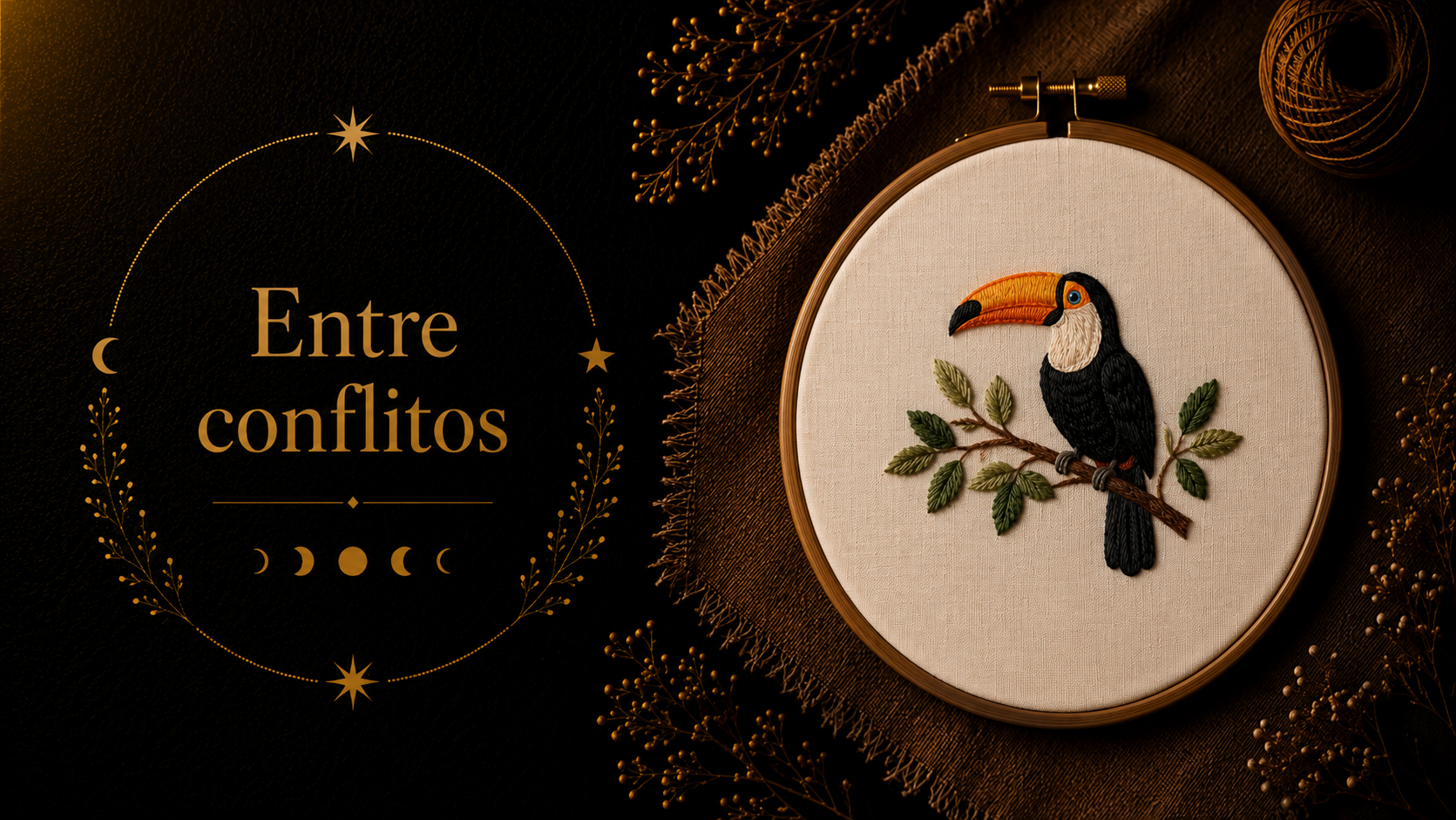
Author’s note: Why the toucan? Because its primary symbolism is clear communication. It also represents authenticity because of its colors.
- GONÇALVES, Fabrício Guimarães. Blog – o que é? Como funciona? E por que “blogar”? What is blog? How to do it? And Why?. Radiologia Brasileira, São Paulo, v. 44, n. 3, p. vii-viii, May/Jun. 2011. (Suggested reading here)
Leave a Reply