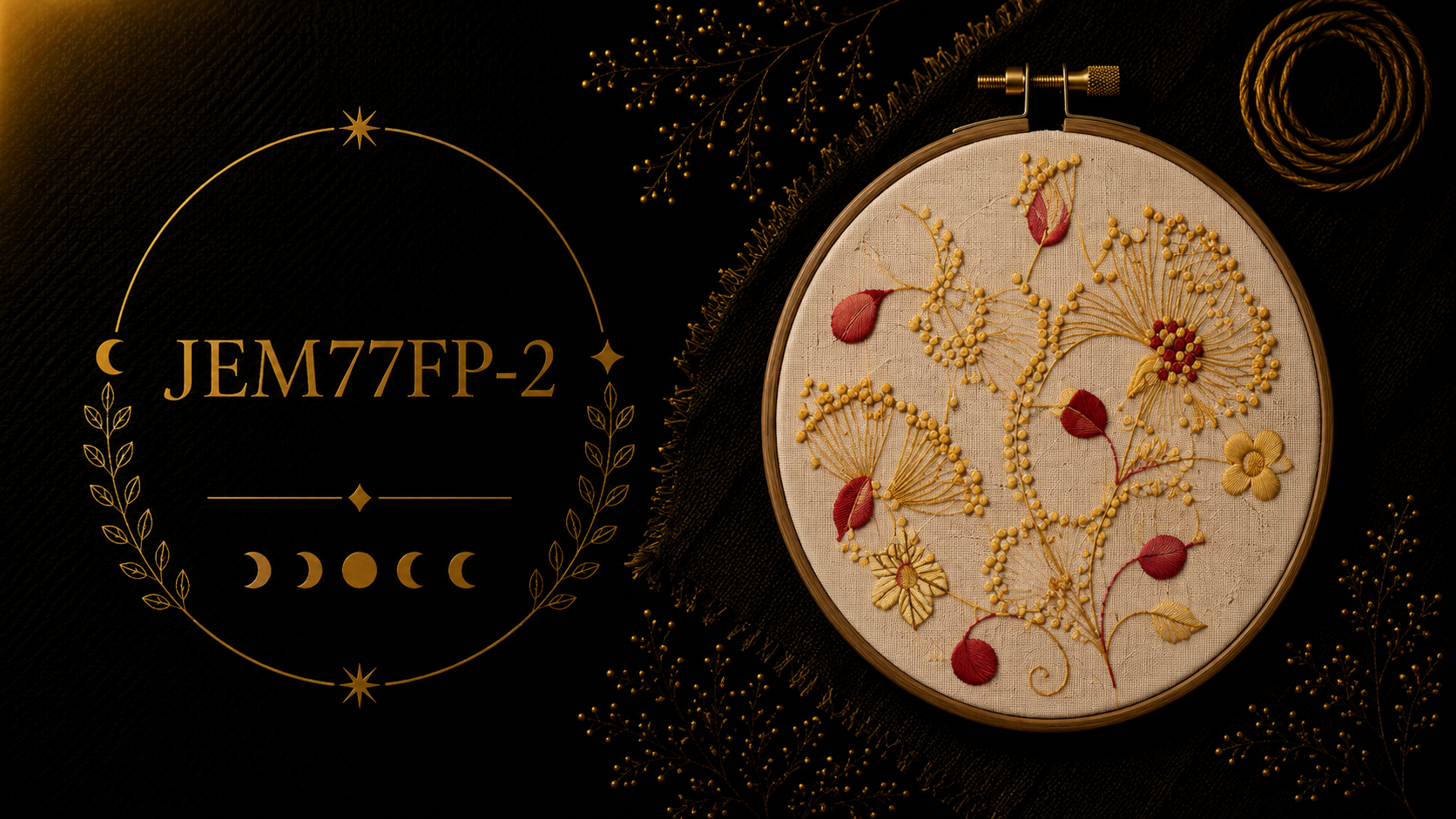
This text overflows with Meraki.
I have many capitalist consumer desires. Some can be classified as futile and unnecessary, and I agree. Considering the direction of our society and so many much more urgent needs, there is not exactly a grand justification for wanting certain things.
Still, some desires remain.
Mine has a name, a brand, a model, a special edition, and a year of release. It has been present in my thoughts since I was 14 years old.
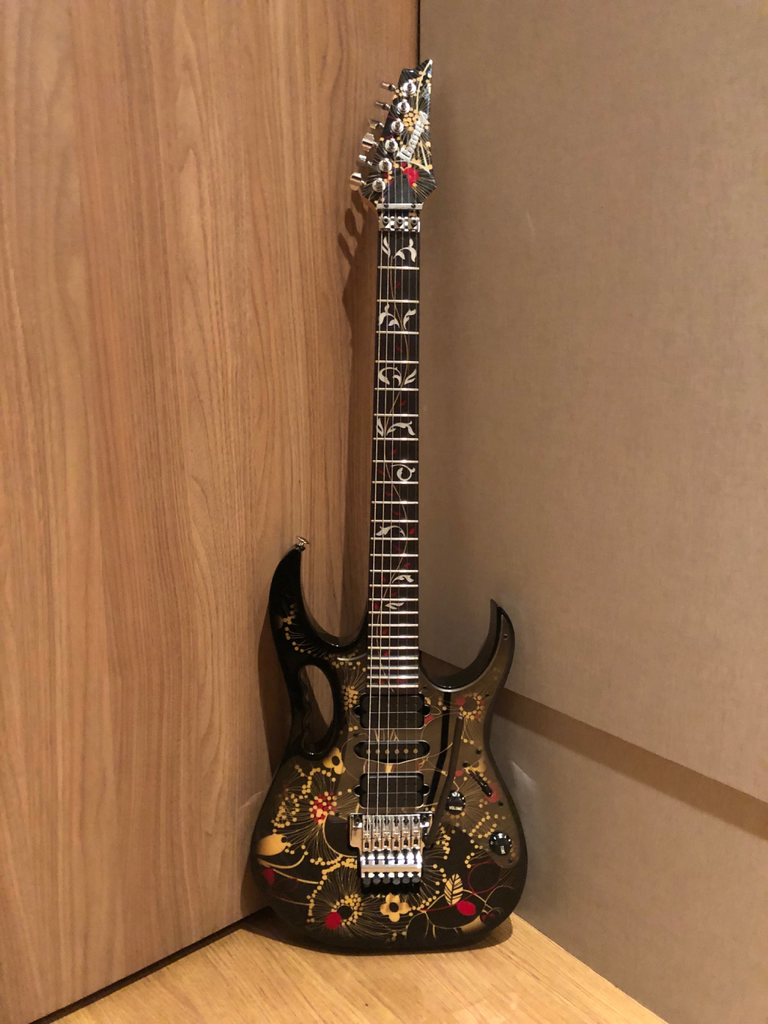
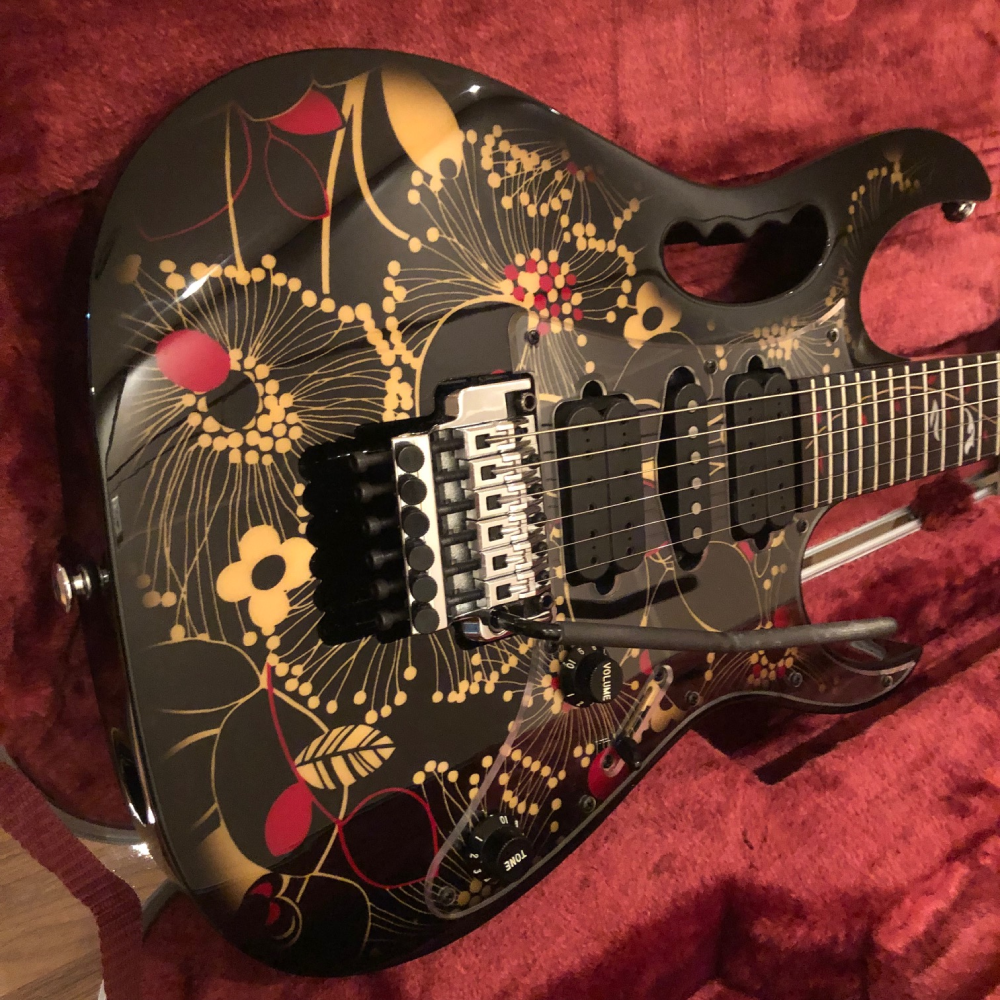
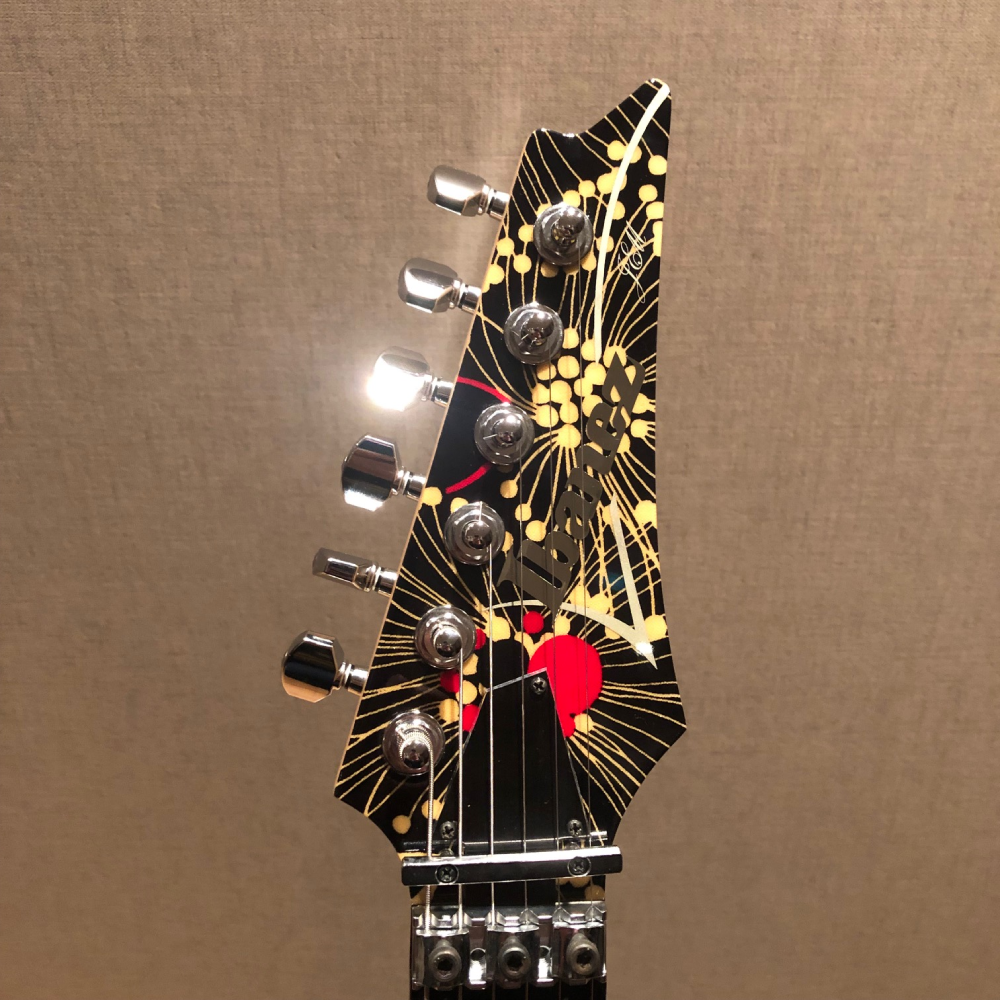
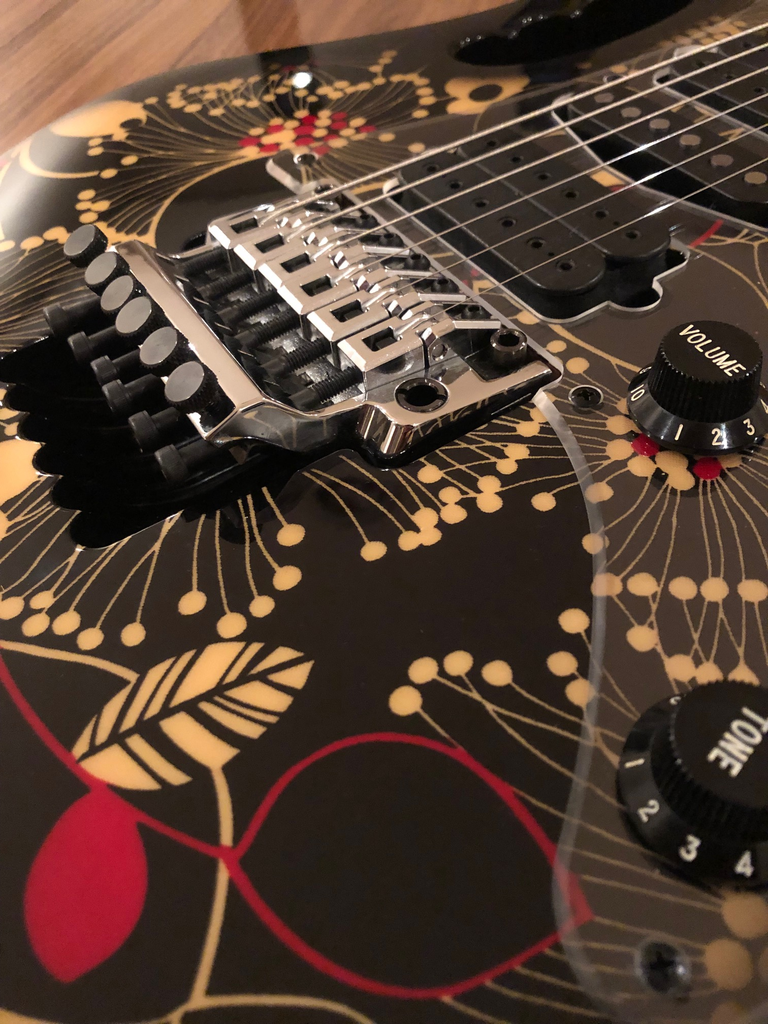
It is an Ibanez JEM77 (Floral Pattern 2), in black.
I could end the text here.
Those who know what I’m talking about have probably already understood why this text overflows with Meraki.
For those who don’t know, the JEM is an electric guitar produced by Ibanez as a signature model for American guitarist Steve Vai. What interests me about it, however, is not merely the association with the musician.
This guitar has a floral finish applied over the instrument’s body. The pattern is printed on fabric and incorporated into the wood’s surface, later receiving a layer of clear varnish. The idea of covering the body with fabric came from Vai himself, who also made the floral application on the instrument’s neck a signature of the JEM models. This specific floral pattern was inspired by the curtains in Steve Vai’s house.
That is.
I, a librarian, researcher, embroiderer, and person who spends a questionable amount of time thinking about fabrics, recovered a memory that at 14 I wanted a guitar covered in fabric.
Perhaps it was all destined to happen.
The original JEM77FP model was released in 1988 and remained in production for many years, with different periods and versions, and I came to know it in 2003. But the release of the Floral Pattern 2, which occupies my imagination, appeared later, in a new configuration launched in 2013.
But there is a second story here that interests me, the curious origin of Ibanez itself.
The brand’s history traces back to Hoshino Gakki, a Japanese company that began its trajectory linked to the book and sheet music trade. Later, the company began producing musical instruments and adopted the name Ibanez, inspired by the Spanish luthier Salvador Ibáñez.
At a certain point, the brand even faced legal issues because some of its instruments were considered too similar to models produced by American manufacturers.
After these conflicts, Ibanez progressively built its own identity and developed models associated with specific musicians, turning signature instruments into an important part of its strategy and identity.
Names came like Joe Satriani, Paul Gilbert, Kiko Loureiro, Omar Rodríguez-López, Pat Metheny, John Scofield, Tosin Abasi, and Nita Strauss.
And Steve Vai.
Perhaps it is precisely this trajectory that makes the guitar even more interesting to me.
A brand that started out selling books, went on to manufacture instruments, faced accusations of copying foreign models, and then built an identity recognized precisely for its own designs and collaborations with musicians.
There is a small story of transformation hidden inside a guitar.
And there is another story, much smaller, happening within my desire for it.
When I was 14, I was passionate about guitars, I still am.
My uncle had a Gibson, and it was he who gave me my first guitar, a black Tonante. It was not a JEM, not by a long shot.
But perhaps that is precisely why the memory has remained, some objects enter our lives without ever really leaving them.
Certain memories lie dormant somewhere, until an image, a song, a piece of research, or simply a different phase of life awakens what seemed to have been forgotten.
Lately, I have been studying mathematical patterns, systems, and I have reconnected with music and the relationships between structures that apparently belong to different worlds. And in the middle of this path, the guitar returned.
Not necessarily because I need it, I definitely don’t, but it represents an adolescent version of me that has not completely disappeared.
And there is a beautiful irony in the fact that the object that awakened this memory is precisely a guitar covered in fabric, it could have been any other material.
In the end, I keep returning to the same things: fabric, image, music, embroidery, symbols. Memory, above all. If you search around here, you will find a text in which I spoke about the accurate description of my Pallas in my astrological chart as a symbolic way of interpreting how I relate to memory.
Perhaps that is what I want to say when I say this text is Meraki.
It does not need to contribute to a research project, does not need to teach how to play guitar, explain the complete history of Ibanez, or justify why I still want a guitar I met in my adolescence.
It just needed to exist.
Because some things we do simply because we like them also say something about who we are.
At this moment, I am once again fascinated by mathematical patterns, systems, and music. At another moment, it will be something else. I have these hyperfixations.
And that’s okay.
The girl who likes guitars can talk to the woman who embroiders, and the librarian can be interested in a guitar. Just as the researcher can spend hours investigating a fabric applied over wood.
And the person who writes about memory can discover that some objects are capable of holding versions of ourselves.
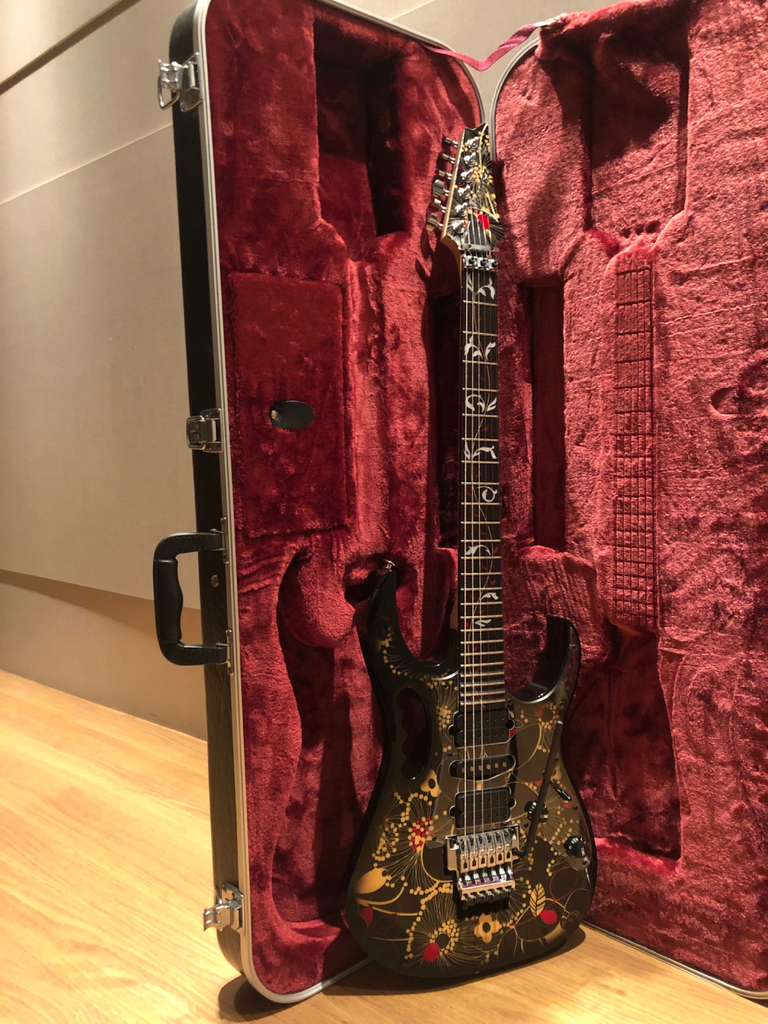
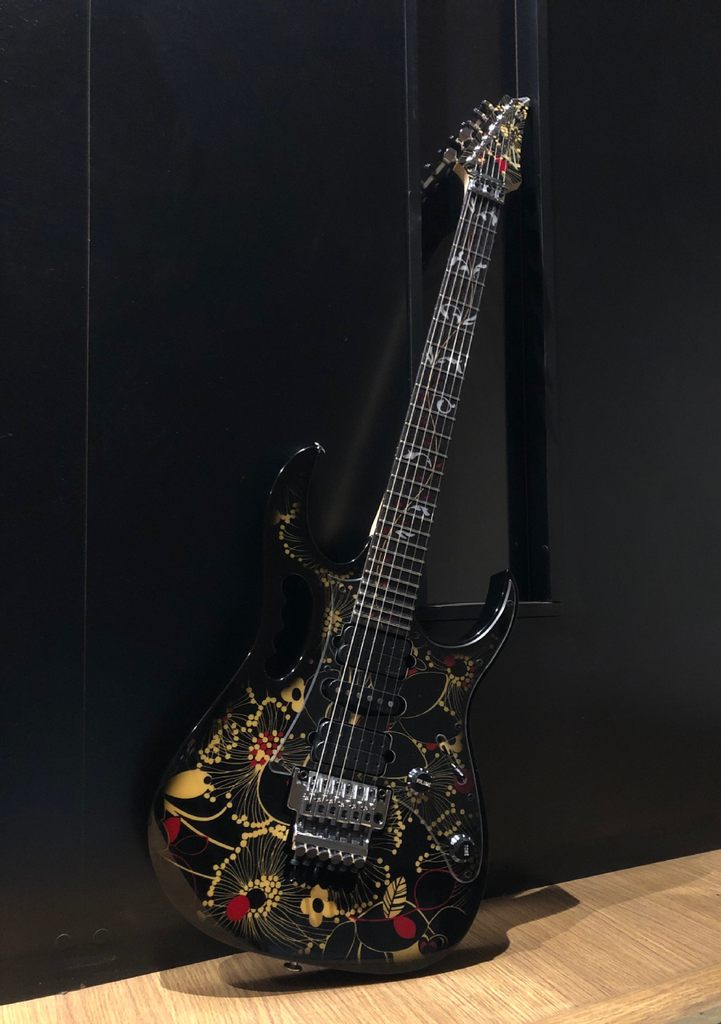
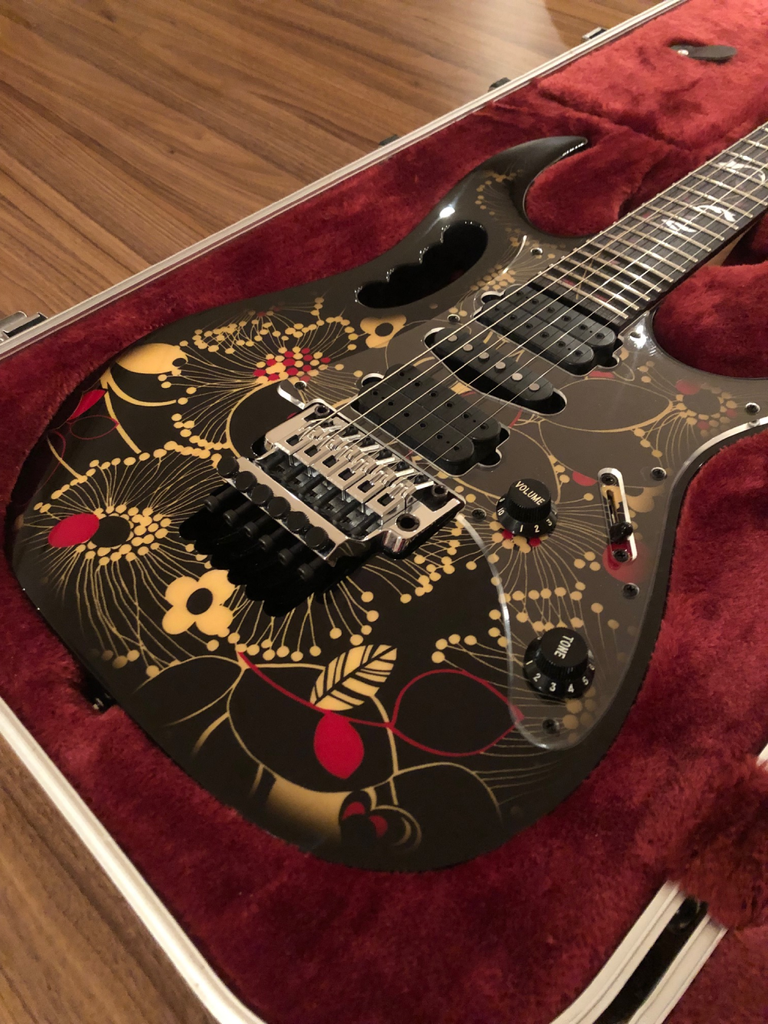
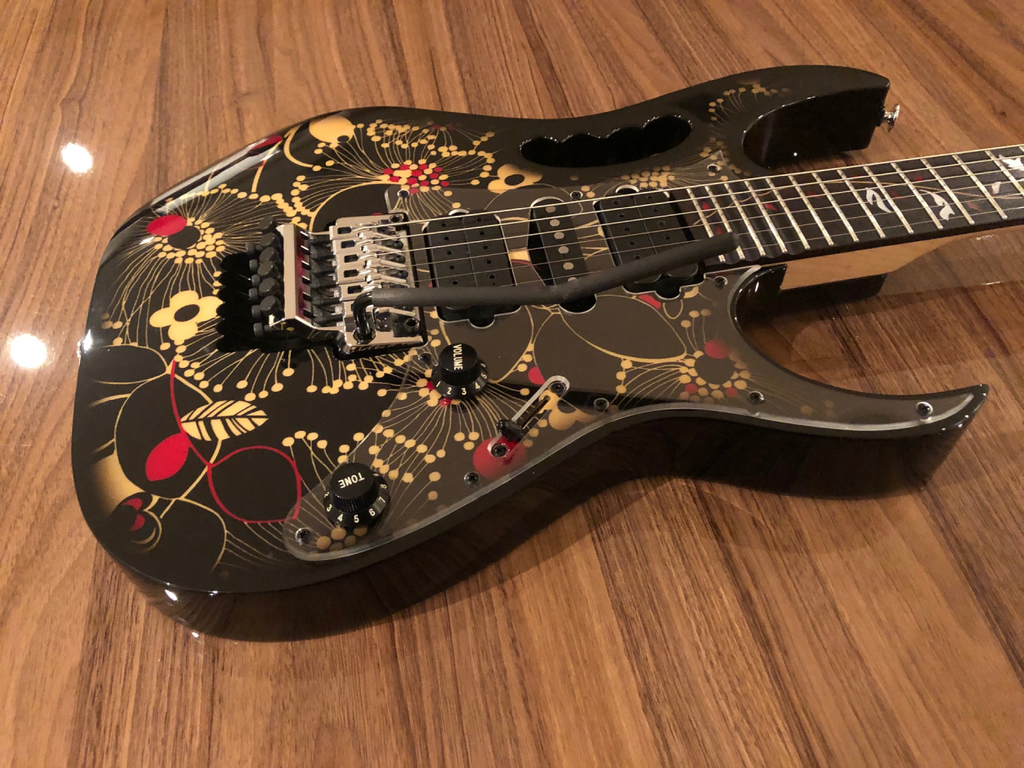
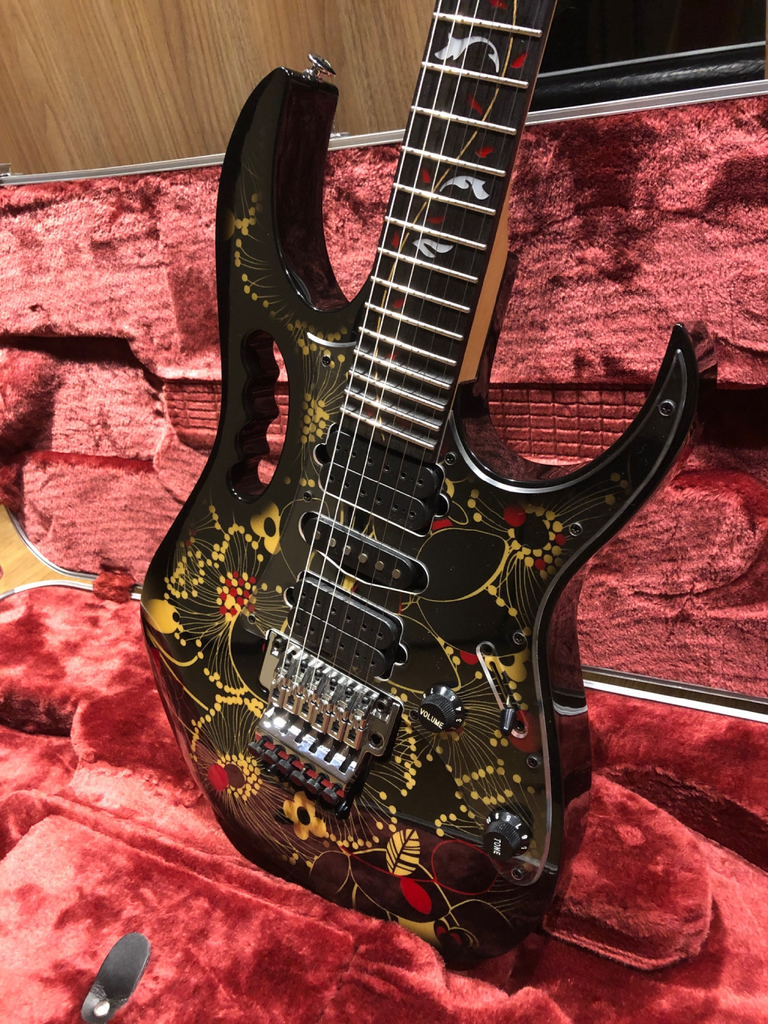
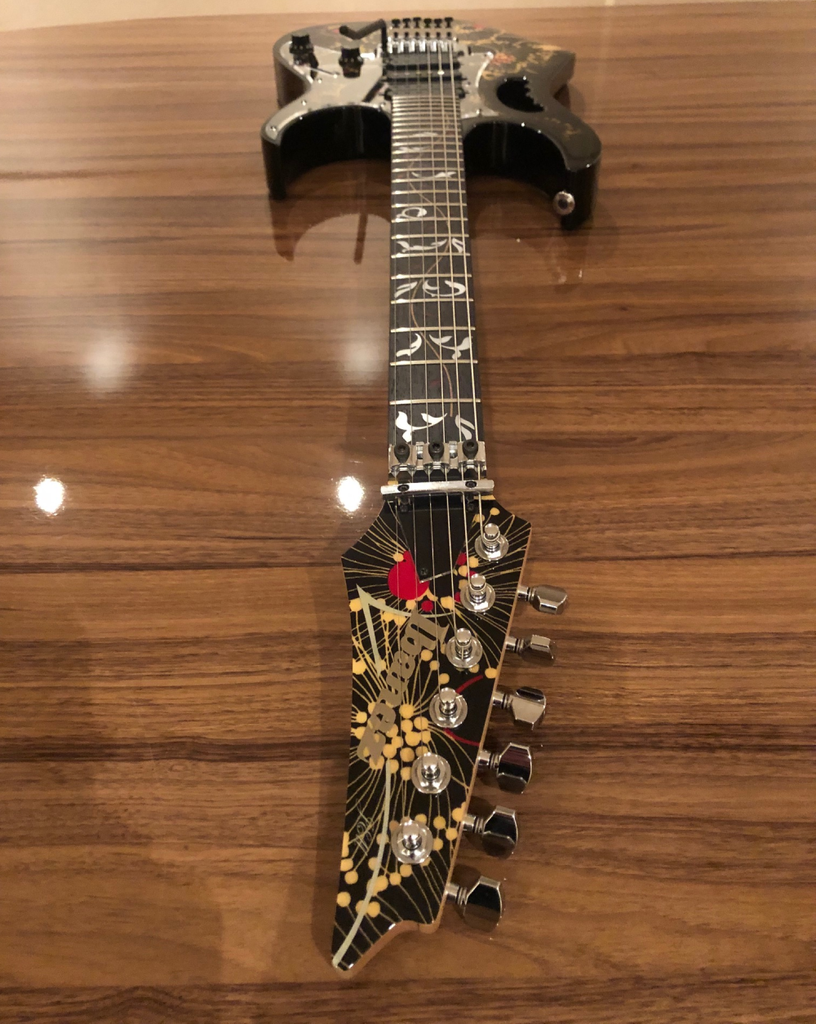
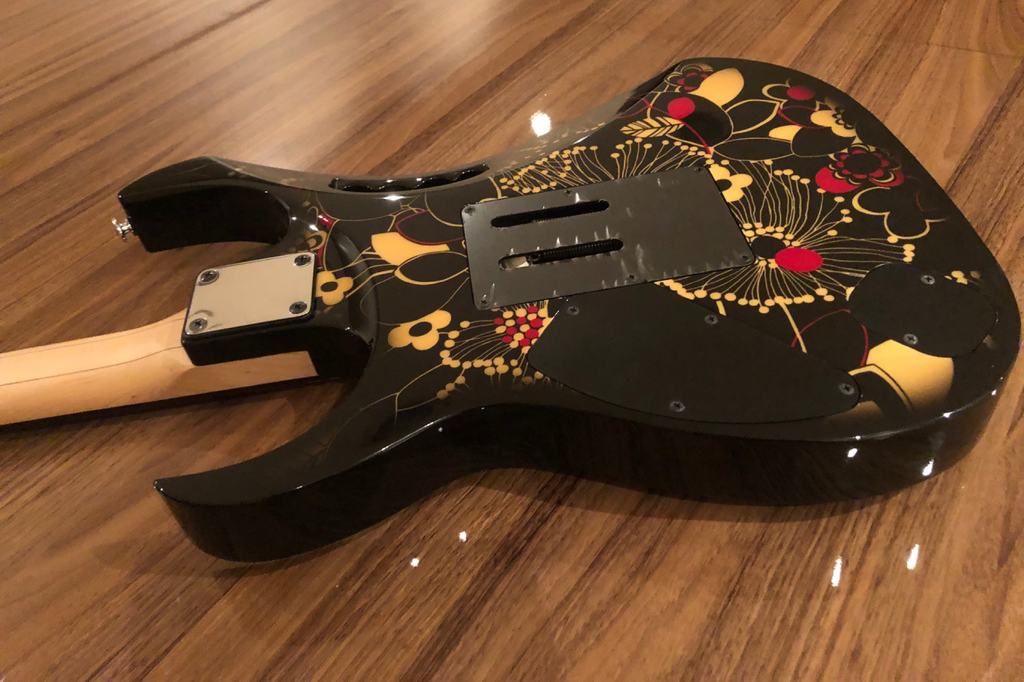
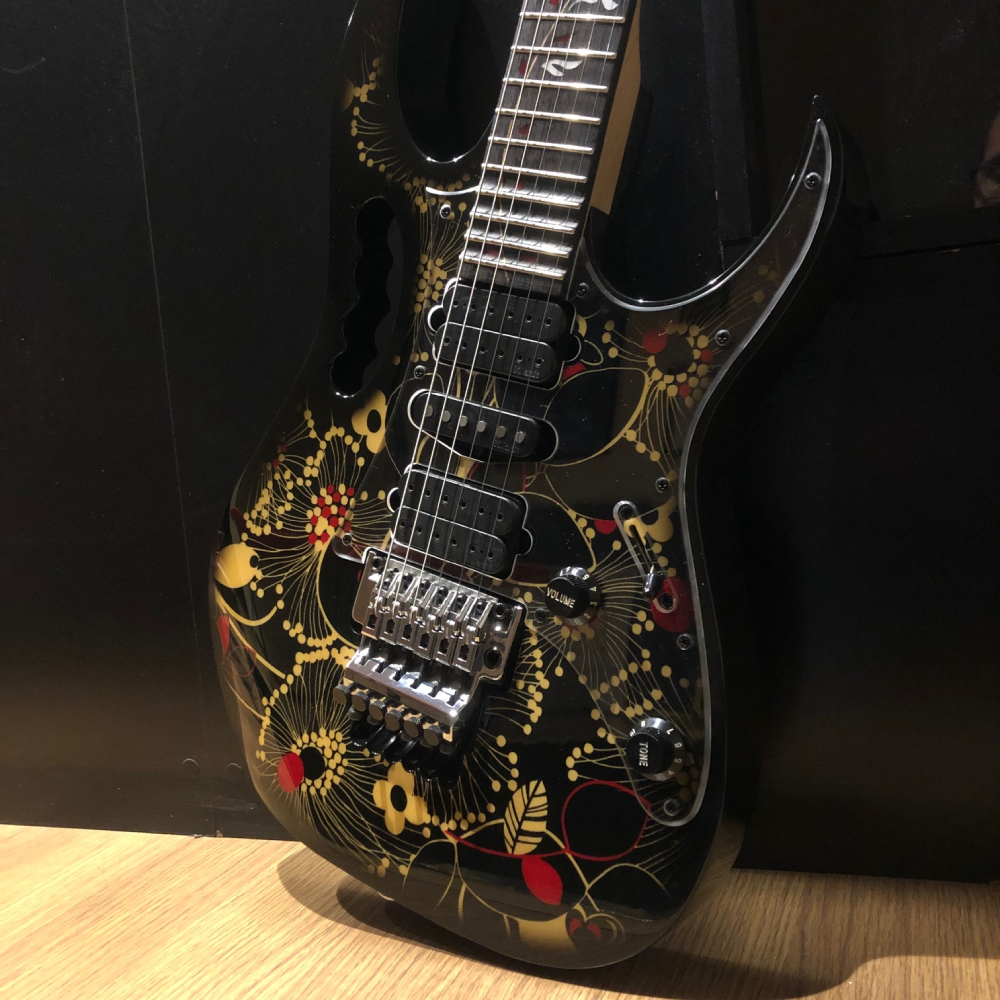
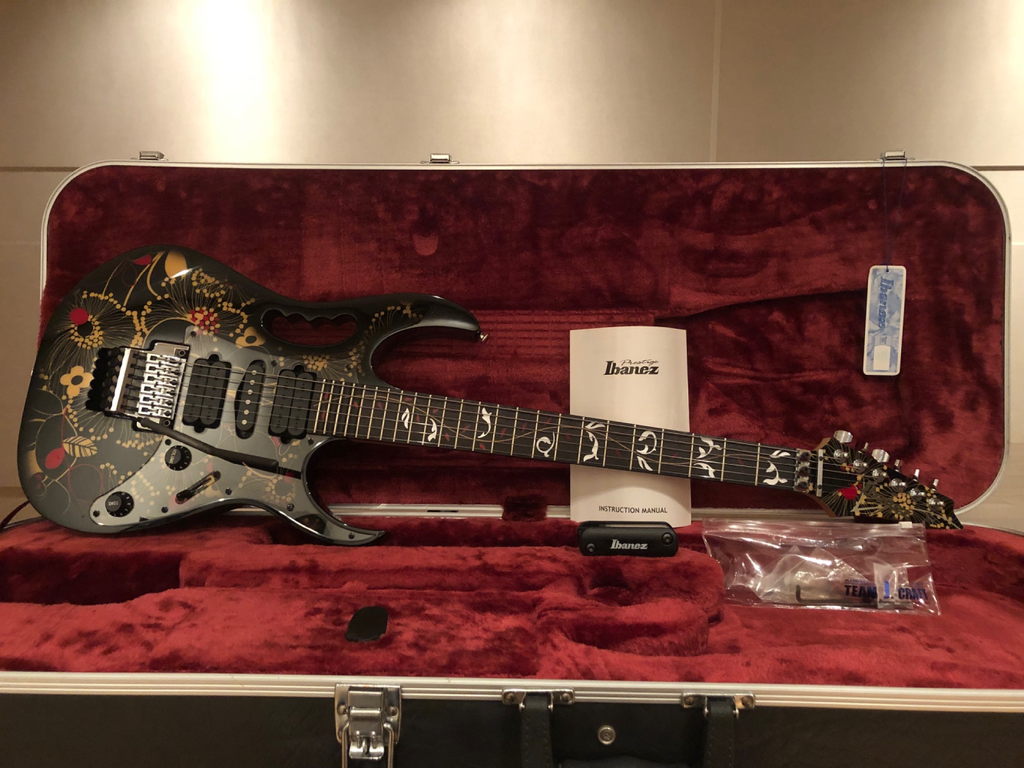
Source: Reference Music Center.
Author’s note: Just observe the guitars.
Leave a Reply