When I think of autumn, what comes to mind is not just the falling leaves.
It’s smell.
Cinnamon, apple, and cake baking in the oven. A warm cup in your hands, a cat curled up on your lap like a cozy cushion while the wind begins to cool outside. Some foods seem to have been born for certain seasons.
The apple is one of them.
Few fruits carry so many meanings across different cultures. In the biblical tradition, it is often associated with knowledge, although the text of Genesis never explicitly mentions an apple. In Celtic traditions, it appears linked to healing, abundance, and the Otherworld.
Avalon, for example, is often translated as “Isle of Apples,” a place associated with rest, healing, and renewal in various narratives of the Arthurian cycle.
In Norse mythology, the goddess Idunn guards apples that preserve the youth of the gods.
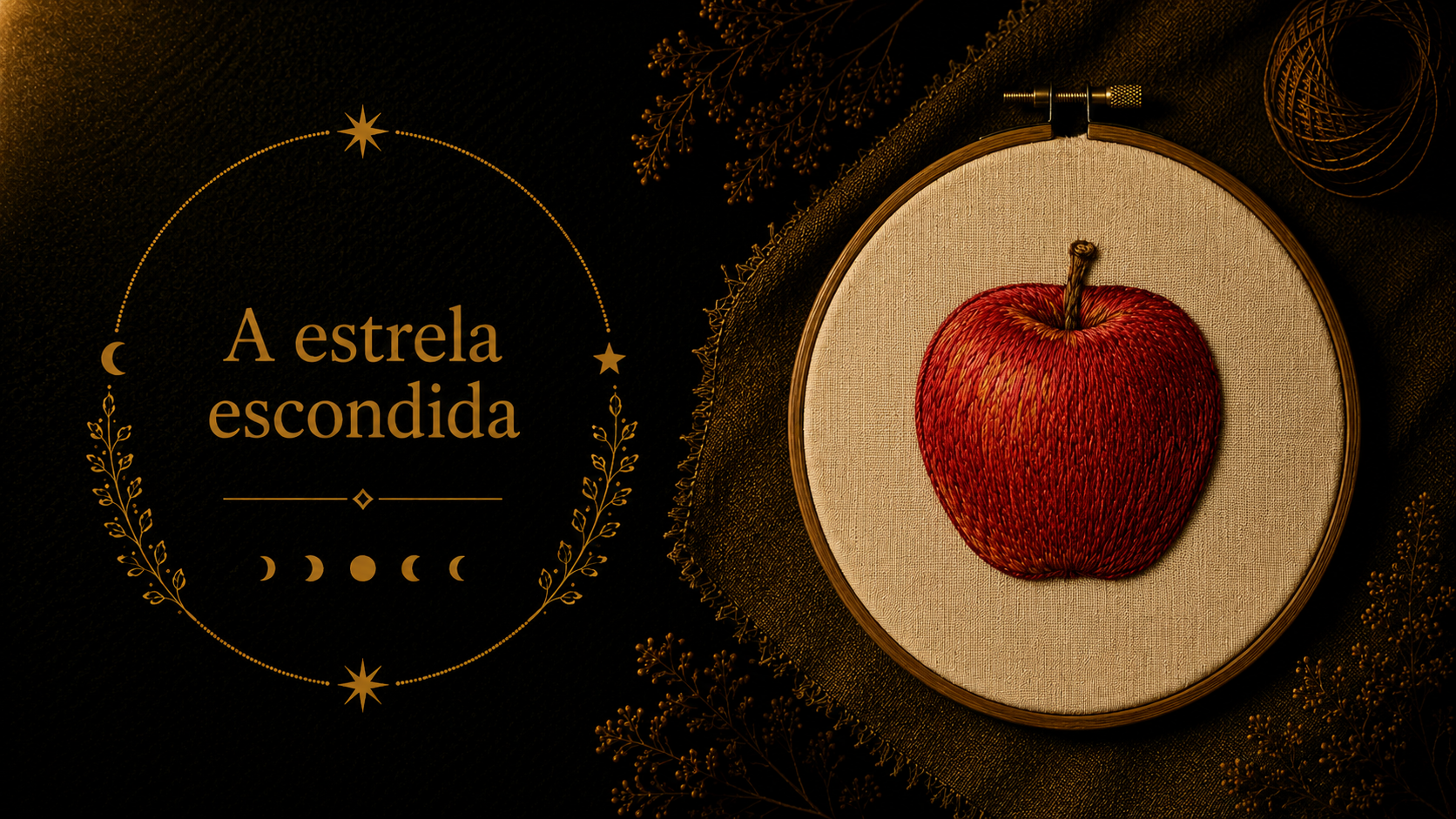
Different cultures, the same fruit and there is a curious detail: if you cut an apple horizontally, you will see that the seeds form a pattern very close to a five pointed star.
There is no mystery in this; it is simply the natural way the fruit’s five carpels are organized.
Even so, it remains impressive that a fruit so laden with symbolism hides a star within it.
Another ingredient inseparable from this time of year is cinnamon.
It is not born in powder form.
Cinnamon is the inner bark of trees from the genus Cinnamomum. After being removed, it dries naturally and curls into the sticks we know.
For centuries, it was an extremely valuable product on trade routes between Asia and Europe. Its high price gave rise to stories, legends, and commercial strategies to hide its true origin.
Today it is within almost everyone’s reach and still warms in the same way.
Combining apple and cinnamon is perhaps one of the happiest pairings in the kitchen. The fruit’s mild acidity meets the spice’s warm aroma, creating flavors that seem to belong naturally to winter and autumn.
Walnuts also carry a long history.
Archaeological remains show that different species were already part of the human diet long before the advent of agriculture. The European walnut (Juglans regia) received from the Romans a name that literally means “Jupiter’s nut,” indicating the prestige this food once held.
Its hard shell protects a delicate interior.
Perhaps that is why so many cultures have associated the walnut with knowledge, wisdom, and that which remains hidden until revealed.
In the end, preparing an apple cinnamon tea or baking a cake with apples and walnuts doesn’t need to be a religious ritual.
It can simply be a way to go along with the season.
Peoples who depended directly on harvests learned to cook with what the land offered at each time of year. We, accustomed to supermarkets, often forget that foods also have their own cycles.
Perhaps that is why certain recipes seem to make more sense at certain times.
When the cold arrives, the body asks for warmth. And perhaps memory asks for it too.
Just cut an apple and find a hidden star inside it because nature likes to remind us that beauty also dwells in small things.
- NARVIDOTTIR, Yavanna. A Roda do Ano. Edited by Ágatha Kimura. 2nd ed. 2023. (Suggested reading here).
Leave a Reply